

ANNEALING MARKING
- Home
- »
- Laser marking
- »
- Annealing marking

Annealing marking with laser - permanent metal marking without material removal
One form of laser marking is called annealing marking. In this process, only the surface of the material to be processed is affected by the laser. Metallic surfaces (precious metals) are selectively heated with the laser beam, resulting in a discoloration that can also be displayed as a color spectrum by varying different parameters. You can also observe this phenomenon on your car's exhaust system.
The achievable result depends on the carbon content of the material and the temperature of the laser. This is because, depending on the material, annealing marking creates oxidations that differ in color.
The marking using the annealing process is optimally suited for all types of metals that change color when exposed to heat and oxygen. The outermost layer of the material is heated only selectively by the laser beam and thus changes color. This results in an extremely high-contrast and very readable marking.
What is meant by annealing labeling?
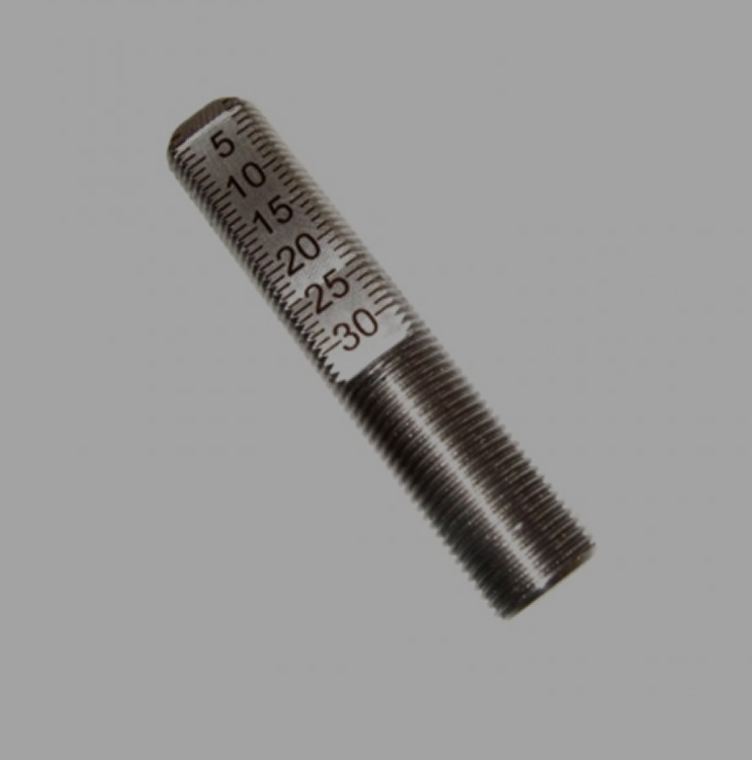
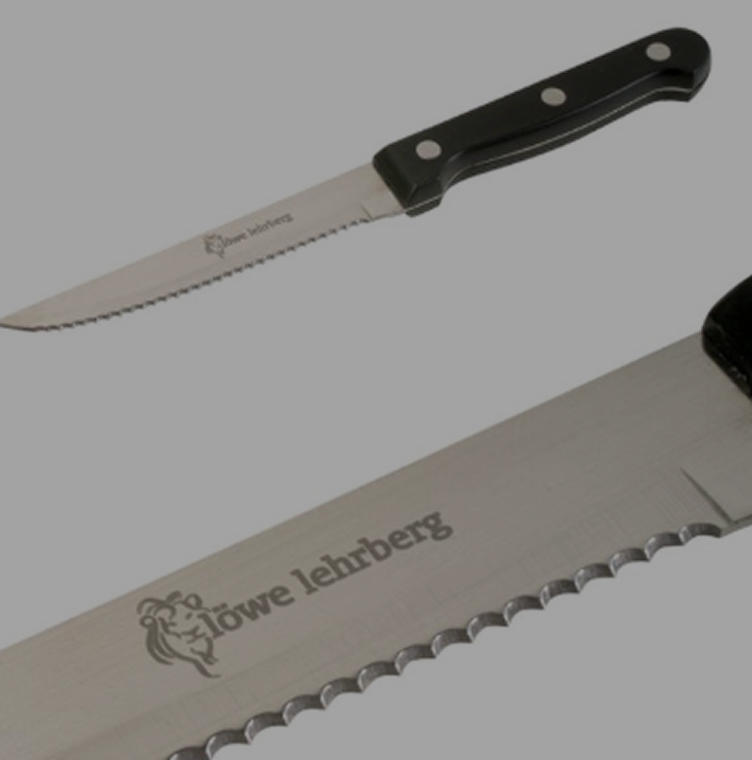
Custom lettering with a laser is a special process of Laser marking of metals, wherein the surface of a workpiece is selectively heated by a laser beam. This creates a very thin oxide layer on the metal surface, which produces the desired contrast of the marking. The material itself is not removed or damaged.
This process is particularly suitable for stainless steel, steel, or titanium and is often used for permanent markings in industry. Due to the precise control of the laser, even the smallest details such as serial numbers, logos, DataMatrix codes, or QR codes can be reliably marked.
A significant advantage of annealing marking is that the material surface remains completely smooth. Unlike laser engraving, no deepening is created, thereby preserving properties such as corrosion resistance and material structure.
Characteristics of annealing marking
Laser annealing marking offers numerous advantages for industrial component marking:
No material removal – the workpiece remains unchanged
Smooth surface without deepenings
Durable and wear-resistant marking
High readability even with small font sizes and fine structures
During the marking process, different tempering colors can arise. These color changes are caused by thermal effects and oxidation processes on the metal surface. Typical colors range from yellow and blue to dark contrasting colors.
This creates a permanent, high-contrast, and material-gentle laser marking, which is particularly used in areas with high quality requirements.
Typical applications of annealing labeling
Laser annealing marking is used in many industrial sectors, especially where permanent component marking is required.
Typical applications include:
Serial numbers and component identifiers
QR Codes and DataMatrix Codes
Logos and product markings
Nameplates and technical markings
Industries |
|---|
Mechanical engineering |
Medical technology |
Automotive industry |
Aerospace |
Electronics manufacturing |
Difference between annealing marking and laser engraving
Various methods are used for laser marking of metals. Annealing marking causes a color change on the surface through targeted heating without removing any material. In laser engraving, on the other hand, material is removed, creating a permanent indentation in the workpiece.
Procedure | Description |
|---|---|
Annealing marking | Color change due to surface heating, no material removal |
Laser engraving | Material is partially removed, creating a depression |
The annnealing marking process is ideal when a surface-friendly and corrosion-resistant marking is required.
Typical characteristics of annealing labeling
no material removal during labeling
A smooth, unaltered surface without indentations
Durable and resistant labels
Very good readability even with small font sizes or fine details

Frequently asked questions about annealing labeling
Typically, stainless steel, steel, titanium, and other ferrous metals are marked using this method.
Yes. The oxide layer is formed by thermal alteration of the material and is therefore very durable and abrasion-resistant.
Yes. Modern lasers enable precise marking of Logos, Barcodes, Serial Numbers, and QR Codes.
Annealing labeling with beLaser labeling lasers
Are you looking to mark metal efficiently and with consistently high quality? Choosing the right laser is crucial for optimal results. In our overview, you’ll find high-performance marking lasers for a variety of materials and applications—from stainless steel to complex components.
Discover the right solution for your needs now and optimize your labeling processes sustainably.
