

- Home
- »
- fiber laser
What is a fiber laser?
In recent years, the fiber laser has become an indispensable tool in numerous industries.
Thanks to its impressive performance and precise processing capabilities, it has established itself as a pioneering technology. Its high efficiency, exceptional precision, and diverse applications make the fiber laser an integral part of modern production processes.
A fiber laser belongs to the group of solid-state lasers and is particularly characterized by excellent beam quality as well as high energy density. Materials such as Metals and Plastics
can be precisely and permanently laser-marked with a fiber laser.
The following explains how a fiber laser works, its applications, and its numerous advantages. In addition, important aspects of purchasing a fiber laser are presented and explained what you should pay attention to when choosing.
Of course, we would be happy to advise you comprehensively on your wishes.

How Fiber Lasers Work
A fiber laser is a powerful laser source that is based on optical fibers and is used to generate laser light. Its operation is based on the principle of stimulated emission, where light is amplified through interaction with active ions within a doped fiber core. This creates a highly concentrated laser beam that is characterized by high efficiency and precision.
Fundamentally, a laser consists of three parts:
- Power source,
- Laser active medium
- Resonator
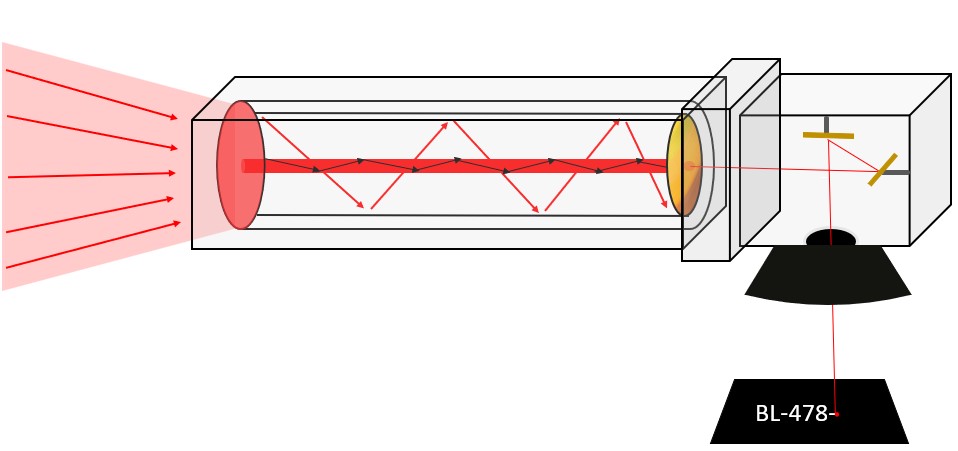
Simplified representation of the structure of a fiber laser.
The fiber laser consists of a doped fiber core surrounded by a cladding layer. The core contains dopants, often rare earth elements like ytterbium or erbium, which are responsible for generating the desired laser wavelength. Energy is supplied to the fiber core using a pump source, exciting the active ions. These then release their stored energy in the form of light, thereby amplifying the optical signal.
The generated light is guided and amplified within a laser resonator. This consists of two reflective elements, one of which reflects almost completely, while the other is partially transparent. Through repeated reflection of the light, coherent and highly focused laser radiation is produced. The laser beam is finally coupled out of the fiber laser via the partially transparent element and made usable for the respective application.
The exiting laser beam of the fiber laser is then guided with the help of two mirrors, allowing it to be precisely aligned with the marking surface. The high energy density of the laser beam is due to the fact that laser light is nearly parallel light and can be optimally focused.
A laser beam propagates at the speed of light, which is 299,792.458 km per second. The same wavelength of the wave trains also ensures that the laser beam is monochromatic.
Which radiation source is right?
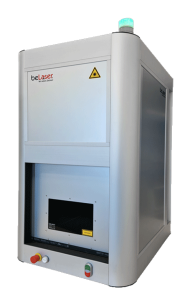
Finding the right laser source is crucial for a precise and permanent marking result. In addition to fiber lasers, CO₂, UV, and green laser sources can also be used.
Whether a fiber laser is suitable for your application depends on the material base and the desired marking result. It is advisable to test the parts and components for laserability in advance. We would be happy to advise you in a non-binding initial consultation and perform sample laser marking of your products. Contact us by email at info@belaser.de or by phone at 09820 221 99 40 and we will get back to you immediately.
Here is an overview of laser beam sources and their suitability for specific materials:
fiber laser
Wavelength range: 1064 nm
Material: Metal, plastic, coatings
The fiber laser is suitable as an all-rounder among laser sources for numerous applications. It is particularly well-suited for laser engraving on uncoated and coated metals of almost any kind and for high-contrast markings on plastics.
CO₂ Laser
Wavelength range: 10 600 nm
Material: Wood, Organic Materials, Plastic, Textile, Glass
The CO₂ laser, also known as a gas laser or carbon dioxide laser, is an infrared laser with the longest wavelength. The CO₂ laser is frequently used for marking products and packaging in the pharmaceutical and food industries.
UV Laser
Wavelength range: 355 nm
Material: Glass, plastic, organic materials, wood
Due to the short wavelength, a photochemical process is used with UV lasers. This is also called „cold marking“ because no thermal deformation occurs. Therefore, the UV laser is ideally suited for marking sensitive materials such as glass and plastics without laser additives.
Green laser
Wavelength range: 532 nm
Material: Glass, plastic
The green laser has a short wavelength at only 532 nm and thus a reduced thermal reaction. The thermochemical laser process is ideally suited for gentle plastic marking. Some plastics react better to the green laser than to the IR laser.
Overview Table - Radiation Source and Suitable Materials
Materials → Beam source ↓ | Metal | Coatings | Wood | Organic materials | Plastic | Textile | Glass |
|---|---|---|---|---|---|---|---|
Green laser | Possible | Possible, with limitations | Not possible | Not possible | Very good | Possible, with limitations | Very good |
UV laser | Possible, with limitations | Possible, with limitations | Very good | Very good | Very good | Possible, with limitations | Very good |
MOPA fiber laser | Very good | Very good | Not possible | Not possible | Very good | Not possible | Possible, with limitations |
CO₂ laser | Possible, with limitations | Very good | Very good | Very good | Very good | Very good | Very good |
Application Examples Fiber Lasers
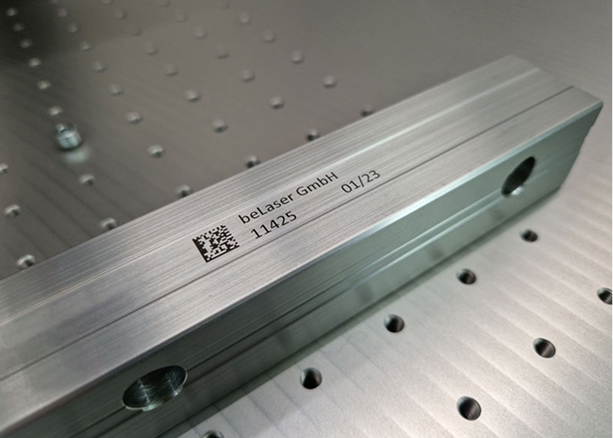
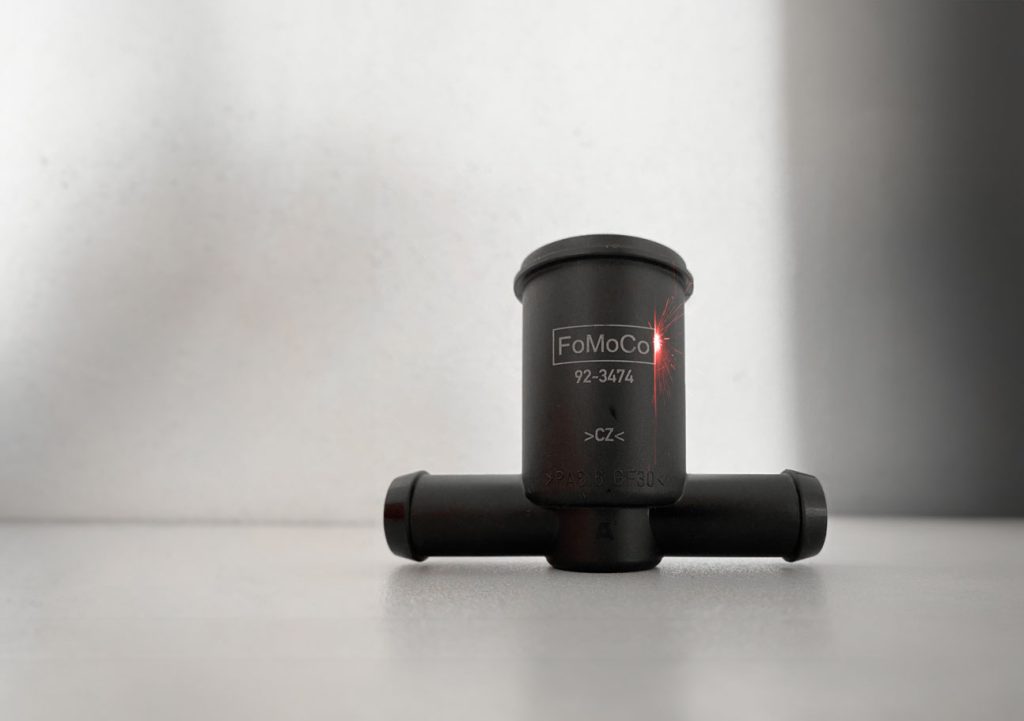
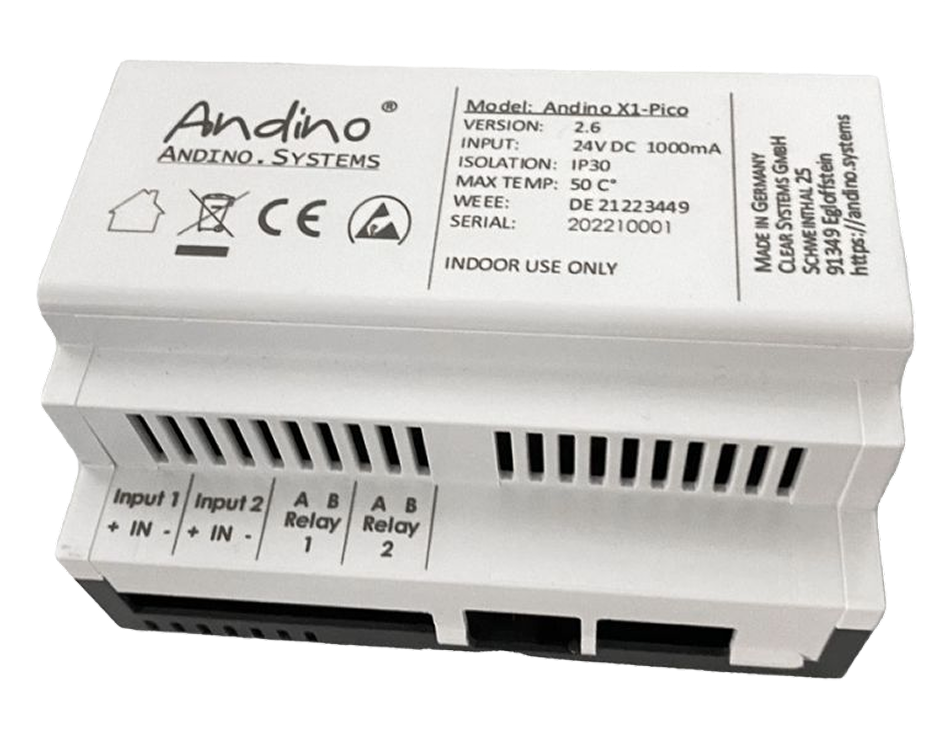
We are happy to assist you in selecting the right laser marker and determining the correct laser source for you. In our laser laboratory, we can test other laser sources in addition to fiber lasers. Feel free to use our laser configurator or contact us directly.
Test our laser configurator
With just a few clicks, you can get your personal offer and find the radiation source that best suits your requirements.
What are the advantages of a fiber laser?
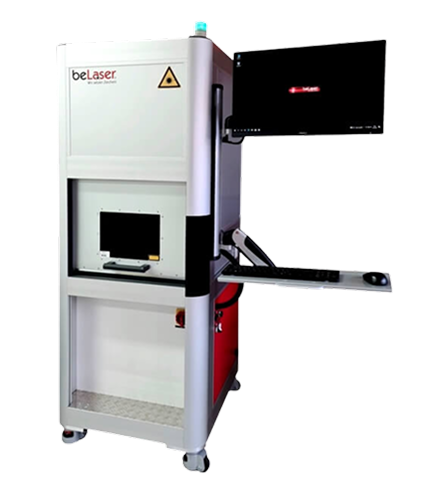
- High Efficiency: Fiber lasers are characterized by their high efficiency, as they convert a large portion of the supplied energy into laser light. This means they require less energy compared to other laser types, leading to cost savings.
- Precision and Control: The concentrated and bundled energy of the fiber laser beam allows for precise engraving and marking on various materials. The beam's focusability enables high control over the processing, leading to high-quality results.
- Versatile Applications: Fiber lasers are used in various industries. For example, they are used across industries for material processing. This allows for both functional markings and the permanent laser etching of complex decorations.
- Compact Design: When considering the purchase of a fiber laser, space requirements also play a crucial role. Compared to other laser types, the fiber laser is compact and space-saving. Its small size allows it to be easily integrated into production facilities or laboratory environments, thus leading to efficient use of available space.
- Longevity and low maintenance: Fiber lasers have a long service life (mean time between failures over 100,000 operating hours) and low maintenance requirements. Furthermore, they are insensitive to contamination and mechanical shocks, and excellent cooling is provided by the large surface area of the fiber. Consequently, external cooling systems can be dispensed with for fiber lasers.
In which laser systems are fiber lasers used?
Whether as a compact table-top system, as a standalone workstation, or as part of an existing production line – thanks to the compact design of the beam source unit, the system can be used in a wide variety of industries and production areas.
In addition to functional markings, a fiber laser-based system also enables high-quality decorative surface finishes. Three different variants are available for your requirements:
Do you need more information?
Our Booklet provides you with an overview of the application areas of labeling lasers and explains the application fields of the numerous beam sources.
All our laser systems with numerous expansion options can be found in our product portfolio.
Please take also by phone or per Mail Contact our expert team. Together, we will find the right laser system and adapt it to your existing production processes. With us, you can buy a fiber laser individually tailored to your needs and wishes.